

Colour Neutrality
Assess visible colour and edge appearance at the selected thickness.
Low-iron substrates for facade studies where colour neutrality and the appearance of thicker glass are important.
01 / APPLICATION OVERVIEW
Low-iron glass reduces the greenish appearance associated with the iron content of ordinary clear glass. It is a substrate choice, not a safety treatment or a thermal-performance classification. The company brochure lists low-iron glass in its scope and records a 10 mm low-iron tempered / 1.52 PVB / 10 mm low-iron tempered build-up at China Resources Building / 66F. That project reference does not establish that the photographed installation is a curtain wall, nor that this construction suits other facades.
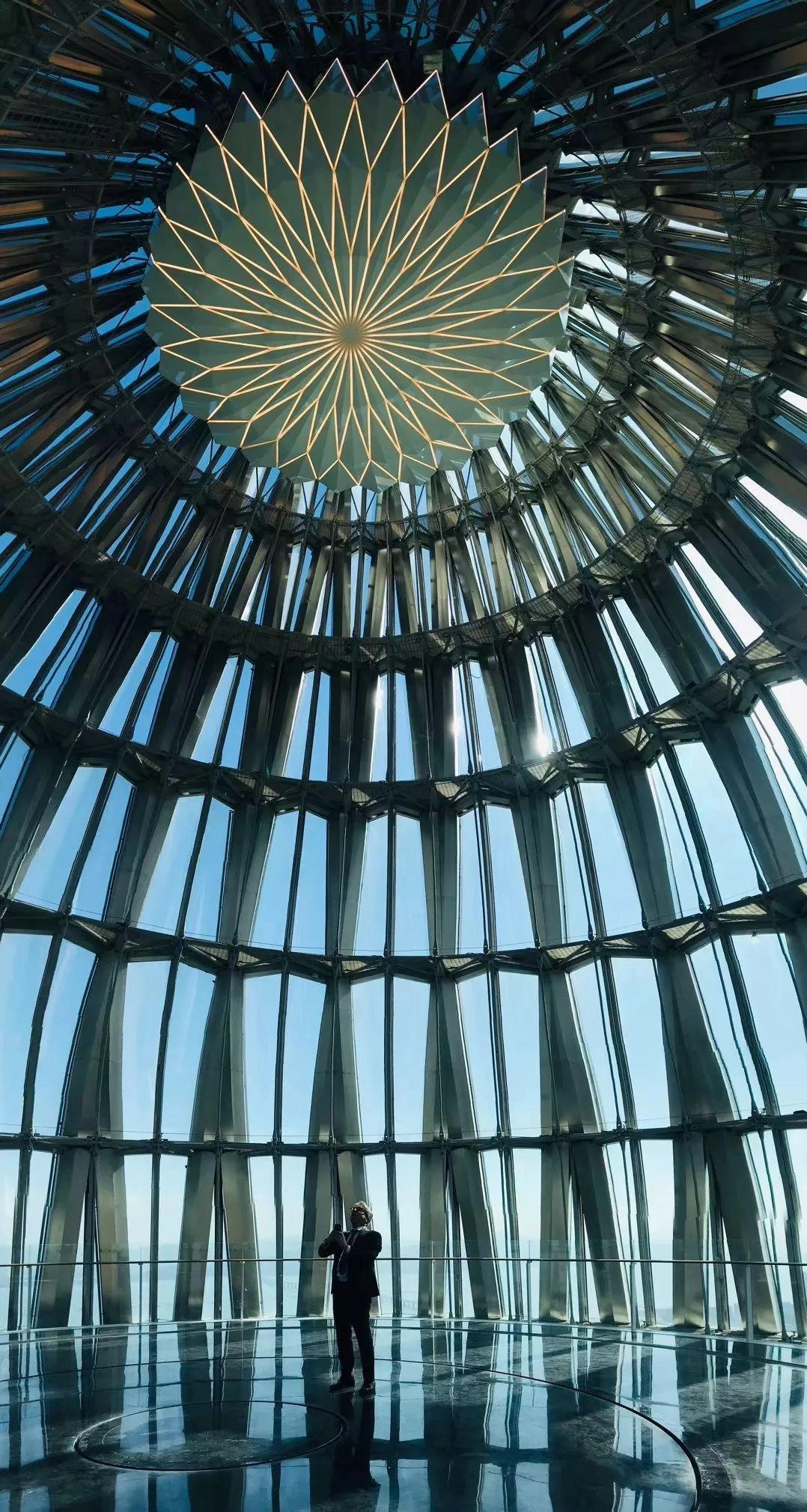
Company brochure p.15: architectural glass at China Resources Building / 66F. Interior reference, not proof of a curtain-wall installation.
Assess visible colour and edge appearance at the selected thickness.

Confirm tempering, lamination and coating compatibility separately.

Review glass, interlayers and coatings together in a project sample.
02 / PROJECT ESSENTIALS

Confirm colour expectations, thickness and glass make-up; review the chosen substrate with coatings and interlayers in a full assembly sample.

Confirm the selected substrate, glass build-up, processing route and material compatibility.

Submit project-specific performance targets and the documents needed to verify them; no generic certification is implied.

Coordinate framing, supports, seals, joints, drainage and installation tolerances.

03 / RELATED GLASS
Laminated glass is made by placing a PVB interlayer between glass sheets in a clean assembly room, preheating and pressing the assembly, and processing it in an autoclave. The supplied company catalogue describes fragment retention, resistance to intrusion, ultraviolet protection and sound insulation. Performance depends on the selected construction; the catalogue is not a specification for every configuration.
Share your facade concept, drawings and performance requirements with our team.